
Finding Weymouth Resident Records
No single public list proves every person at every Weymouth address. The right path depends on the question. A current property question begins with the assessment map. An ownership-history question begins with the Norfolk Registry. The state voter form confirms one registration at a time once the required identity details are supplied, while requests for public local voter data go to the Weymouth Board of Registrars and Town Clerk. For a former household, the strongest sequence usually runs from an address to a deed, then outward to a directory, newspaper, cemetery, or town report.
Every official record has limits worth knowing. An owner of record might be a trust, an estate, a company, or a person whose tax mail goes elsewhere. A deed names the parties to a land transaction, nothing more. A historical directory is just a dated snapshot of one moment. Treat each match as a single piece of a Weymouth record trail, then compare names, dates, street references, and legal descriptions before concluding anything about a resident.
- Open the Weymouth MapGeo card for a known address and record the situs address, parcel identifier, owner, and title reference.
- Use the owner or title reference in the Norfolk Registry index, then follow grantor and grantee names through earlier deeds.
- For an individual voter-status confirmation, enter the registered first and last name, date of birth, and residential ZIP in the state tool.
- For an older Weymouth household, compare directory years with town reports, Gazette notices, yearbooks, and census records.
- When no online source holds an existing record, send a focused written request to the Town Clerk or the department that keeps it.
Note: A name match is a starting point, not proof that two records describe the same person.
Weymouth Resident Record Hubs
Four offices anchor a practical Weymouth residents directory search. The Board of Assessors provides the parcel and assessment context. The Norfolk County Registry of Deeds holds the recorded and registered land trail. The Town Clerk keeps municipal archives, local vital records, elections, street lists, and many public-record requests. Massachusetts Trial Court Case Access opens the door to public court docket research, though the paper file stays with the clerk or register that holds it. The address-by-address chain continues in the Weymouth street directory.
Norfolk County Registry of Deeds
649 High Street
Dedham, MA 02026
781-461-6101
Recorded land, Land Court, plans, and title references
Weymouth Board of Assessors
Town of Weymouth
Weymouth, MA
781-682-3677
Assessment cards and MapGeo property records
Weymouth Town Clerk
75 Middle Street
East Weymouth, MA 02189
781-340-5017
Municipal archives, election records, and requests
Weymouth sits in Norfolk County, but its record custodians are scattered. The Registry operates from Dedham. Local records stay in Weymouth. Courts handling a Weymouth matter sit in Quincy, Canton, Brockton, and Dedham. Know the record type first. It keeps a search from landing with the wrong custodian.
Weymouth MapGeo Property Records
The Town of Weymouth presents its Online Property Viewer as a gateway to improved search. It also offers printable record cards and tax maps, zoning, voting and deed links, FEMA flood information, and community layers. Typing an address or street can lead to a parcel polygon on the map. Open the card. It shows a situs address, owner of record, mailing address, assessment figures, a property description, and a parcel identifier. Those are assessment facts, strong for following a property trail. But they do not amount to a complete list of people at the location.
Read the Town’s Online Property Viewer introduction before opening the public map.
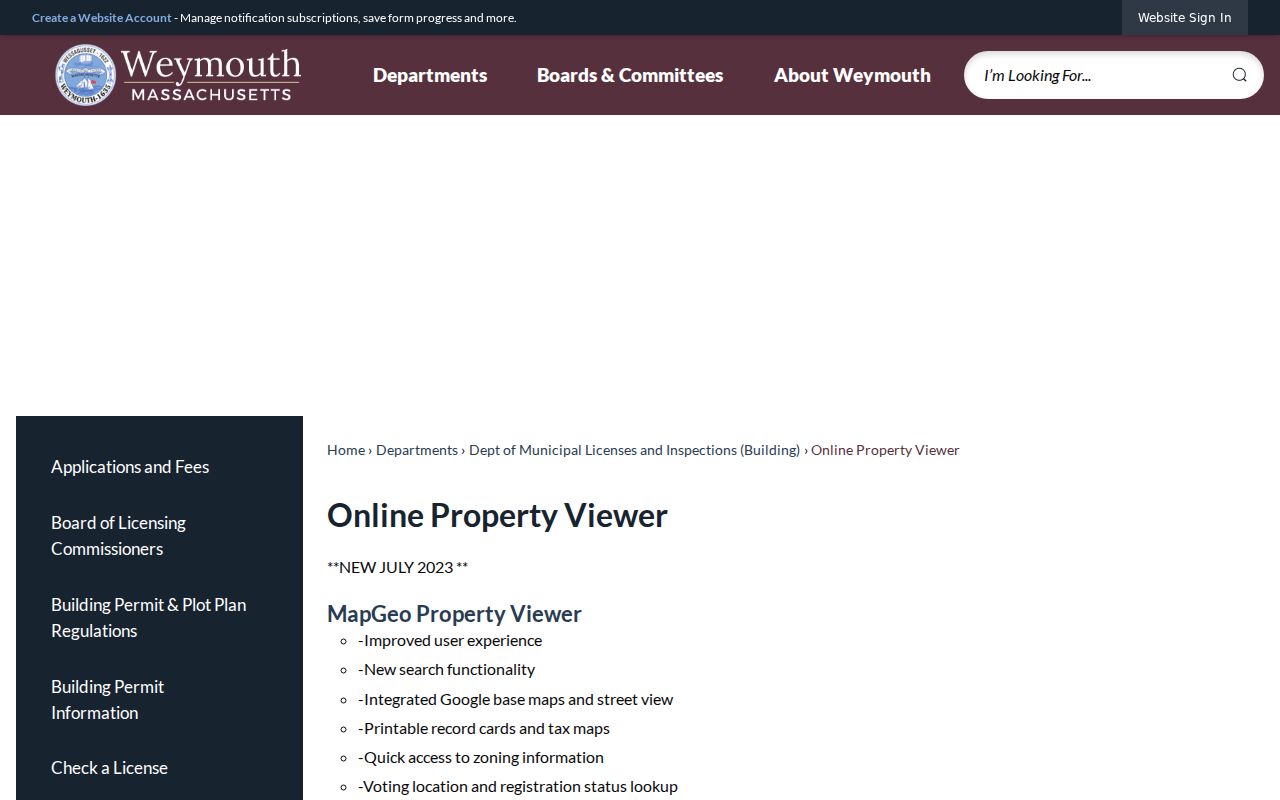
The Town page frames MapGeo as a property and records tool, which helps keep a parcel search separate from a hunt for present household members. The live Weymouth MapGeo property search is the working map for any address, owner, or parcel inquiry.
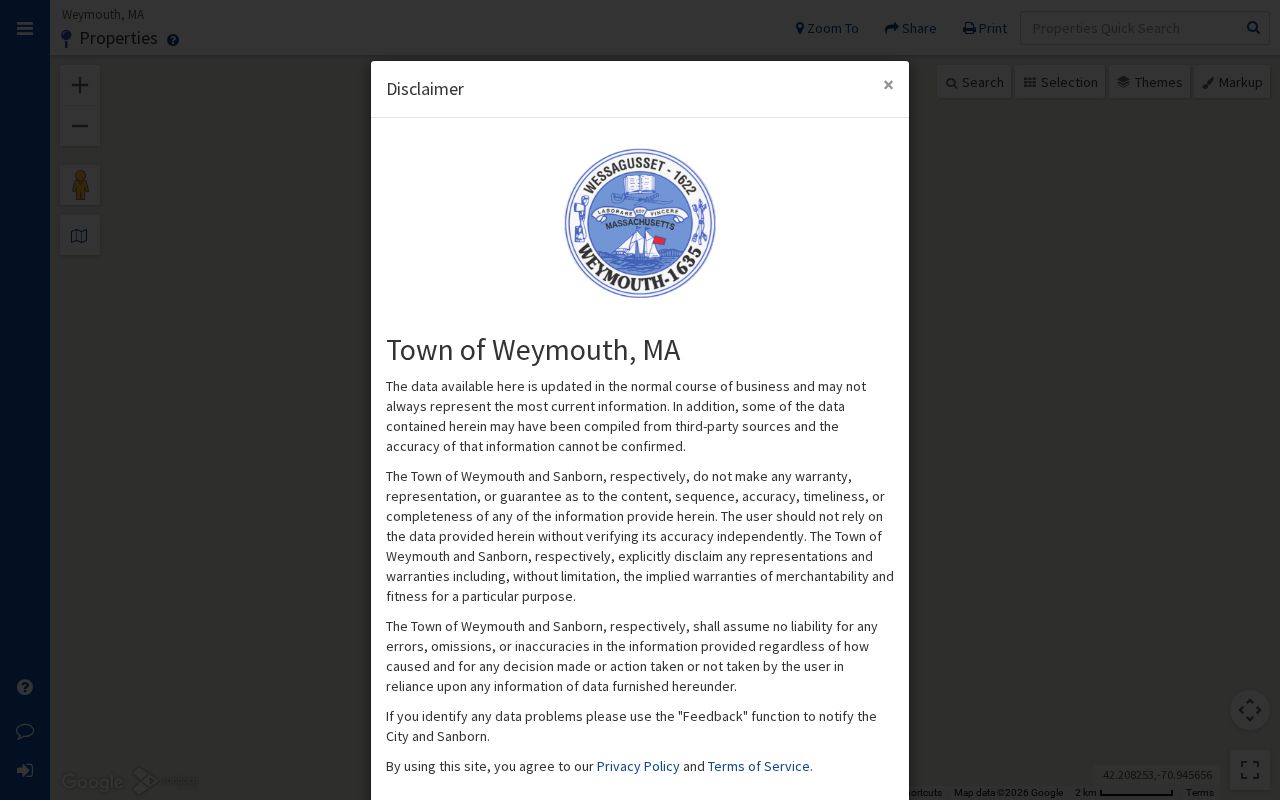
Carry a printed card or tax-map reference into the Registry search for a specific parcel. The map pin alone never settles who occupies a Weymouth address.
| MapGeo field or control | How it helps |
|---|---|
| Address or street search | Locates a mapped situs address or a street segment. |
| Owner name | Supplies the current assessment owner as a title-search lead. |
| Parcel or property ID | Connects the card, tax map, and later file request. |
| Printable card and tax map | Preserves the assessment and map reference for comparison. |
| Deed and voting links | Points toward the Registry or election information without turning the map into a resident roll. |
Note: MapGeo shows a current assessment view, so save the card date before comparing it with older title or directory evidence.
Weymouth Voter Confirmation Records
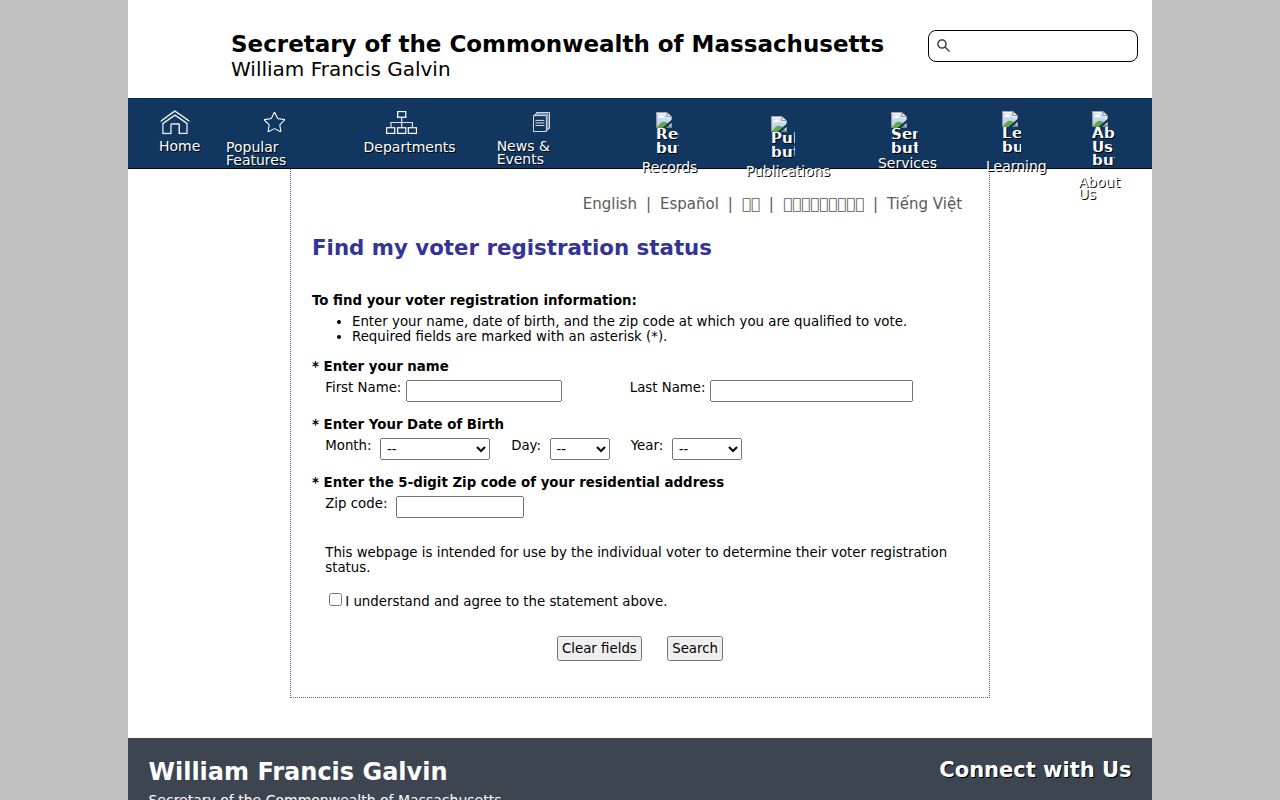
Massachusetts offers an individual voter-status form, not a browseable statewide directory. It asks for a first name and last name. It also requires a month, day, year, a five-digit residential ZIP, and an agreement acknowledgement. A failed lookup can stem from an old ZIP. The name used at registration matters too. A recent change, an inactive or cancelled record, or a protected record can also cause a failed match. It is not a tool for assembling a street-wide list. The official Massachusetts voter-status search displays the required confirmation fields.
Public voter records beyond a single confirmation live with Weymouth’s Board of Registrars. The Town Clerk also holds them. A request should specify the list type, date, format, and any needed redactions. Public fields can include name, residence address, party, date of birth, status, and voter ID. Phone, email, veteran status, permanent absentee status, minor records, and confidential records stay withheld.
Current Weymouth Resident Sources
Current sources each answer a narrow question. The assessment card covers a parcel and its owner. Land records cover title and recorded instruments. A local voter file covers public election fields, subject to exclusions. Court dockets record cases, not a person’s current address. A reliable Weymouth residents directory search keeps each of these records in its proper lane.
| Record source | Best local use | Custodian | Access route |
|---|---|---|---|
| MapGeo assessment card | Owner, situs, parcel, mailing clue, and tax-map context | Weymouth Assessors | Public viewer |
| Recorded or registered land | Title parties, deed reference, legal description, and plans | Norfolk Registry | Free index and counter research |
| Local voter record | Public registration fields and street-list context | Board of Registrars / Town Clerk | Focused local request |
| Court docket | Case number, party, type, events, and disposition | Trial Court clerk | MassCourts, terminal, or clerk |
| Municipal file | Existing permits, agendas, or department records | Weymouth department | Department inquiry or public-record request |
A compiled commercial profile merges records from different eras. It can fold same-name people into one entry. Official sources give you a named custodian and a clear date. They also state a purpose for each record. That clarity matters. Still, neither type replaces the underlying document. Verify before relying on a result for family research or a Weymouth property history.
| Official record | Compiled profile |
|---|---|
| Identifies the custodian, record type, and date. | May merge material from many dates and sources. |
| Can be checked against its original image or file. | Needs independent confirmation against the custodian. |
Note: A mailing address, a case caption, and a voter address each answer a different records question.
Norfolk Deeds for Weymouth Residents
The Norfolk County Registry is a deep well for Weymouth deeds. Recorded-land indexes and images reach back to 1793. Scanned index books run through 1955, and transcribed documents cover 1793 to 1900. One combined grantor and grantee index helps with your search. It lets you narrow results by party role, document type, town, date, or book and page. Start broad with the surname alone. Add a first name or middle initial only after the first pass. The Registry indexes names exactly as written on each instrument. So an asterisk variant helps when spelling shifts, initials swap, or a spouse or trust name clouds the match.
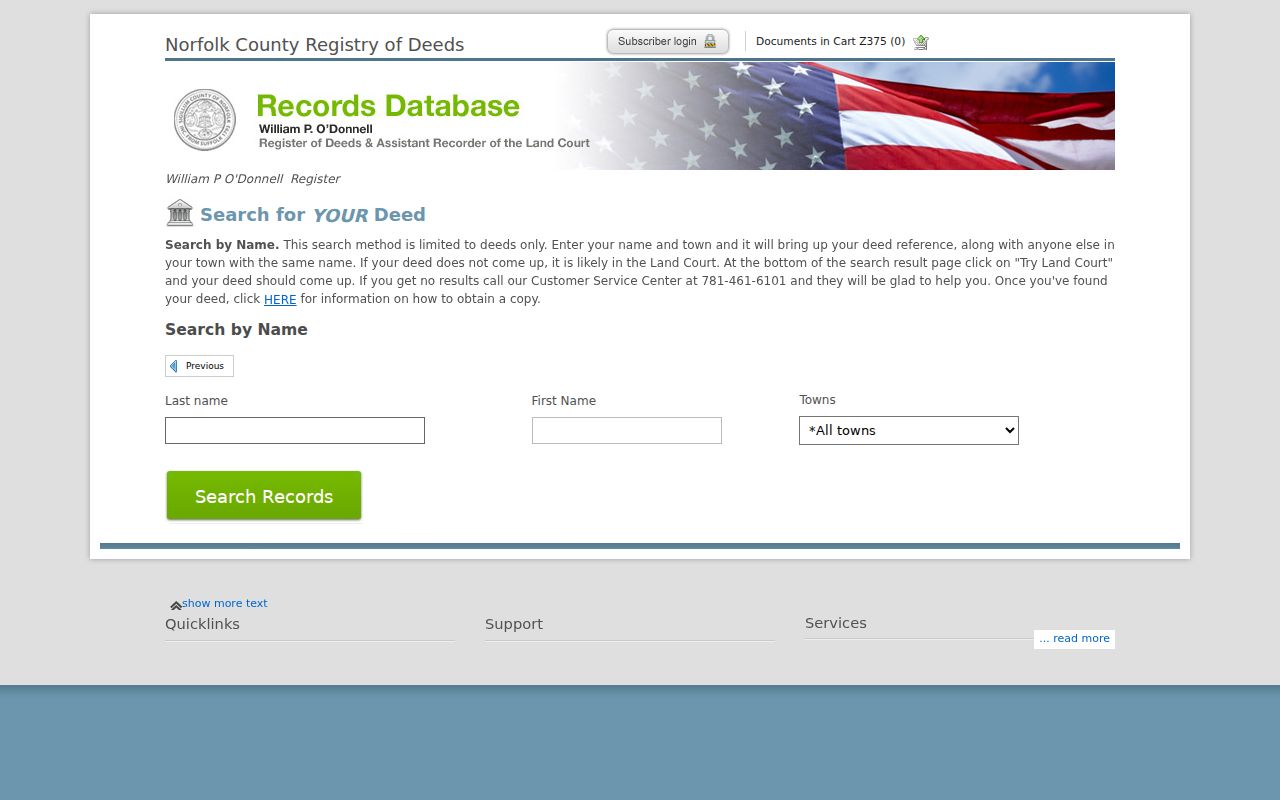
Need a quick entry? The Registry’s Search for Your Deed screen takes just a name and town.
Address indexing is rich for documents recorded from 2003 forward but thinner before that. Older Weymouth addresses need a different route. Pull the current owner or legal reference from MapGeo first, locate the most recent deed, then trace each seller back as a prior grantee. Registered Land, often called Land Court, sits in its own online index starting in 1973. An empty recorded-land search may simply mean the parcel lives there instead.
- Parcel
- A mapped unit of property used in assessment records.
- Index
- A finding tool that points to a record, rather than the record image itself.
- Grantor and grantee
- The party transferring an interest and the party receiving it in a land instrument.
- Legal description
- The title language that identifies land by lot, plan, boundary, or another legal reference.
Weymouth Court Record Checks
A court hit proves a named party appears in a public case. It proves nothing about where that person lives now. The statewide starting point is Massachusetts Trial Court Case Access. Civil searches run on party names. Most criminal searches need a case number. A result screen can display the case number, type, status, events, disposition, and calendar details. Sealed, impounded, juvenile, and other restricted records stay out of reach. Remote images can also be narrower than what a courthouse terminal offers.
The Massachusetts Trial Court Case Access landing screen opens the public court search.
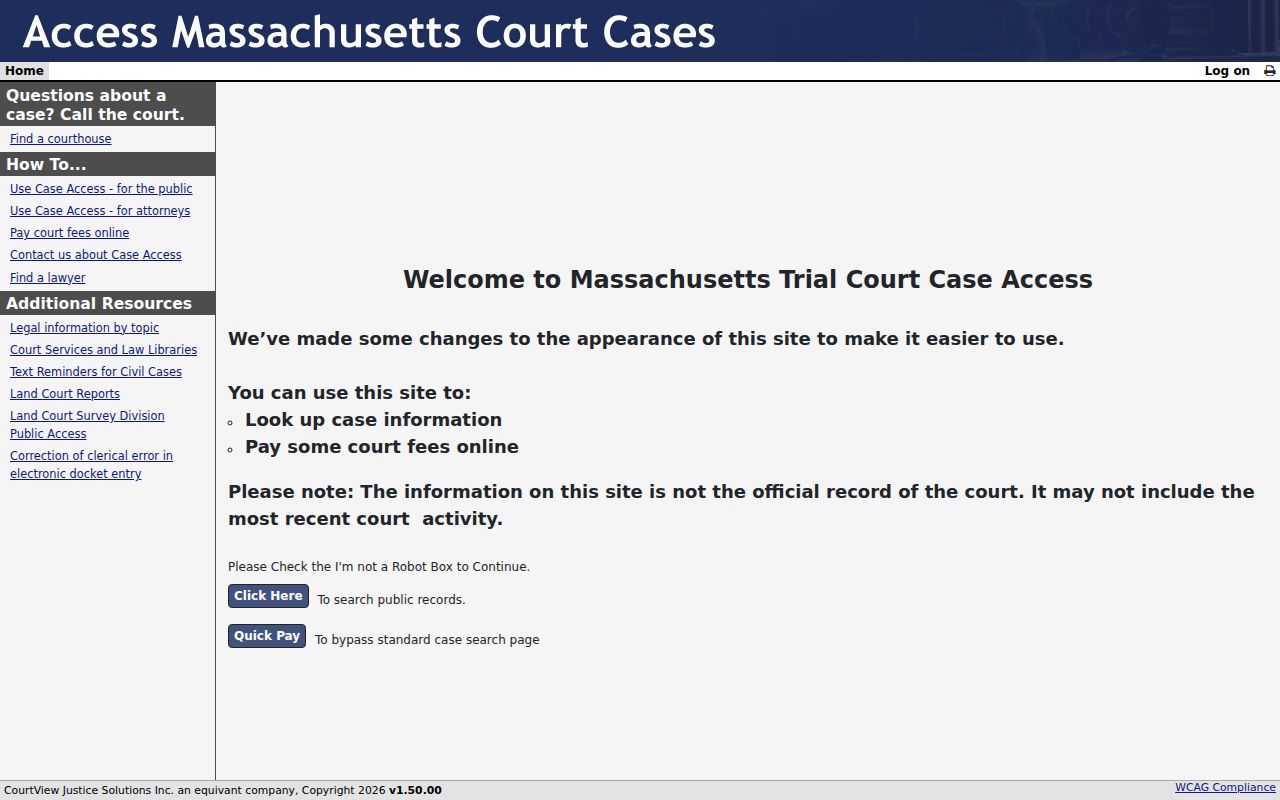
Several courts serve Weymouth matters. Quincy District Court, Norfolk Probate and Family Court in Canton, and Norfolk Superior Court in Dedham are the main ones, and the state serving-court directory names others. Ask the clerk who holds the file for copies or certification. A docket search only indexes a case. It is no stand-in for the official file itself.
Note: Match a docket by its case number and case type, not by a shared party name alone.
Weymouth State Name Tools
State tools can add narrow, dated leads to a Weymouth resident search. The Division of Occupational Licensure search accepts a first, middle, or last name. It also takes city, state, ZIP, board, license type, or license number. It confirms a credential or license status rather than a full personal history. The Massachusetts Treasurer’s unclaimed-property search matches names and addresses. But it demands proof before paying a claim. SORI carries its own public-level limits and is never a tool for general case digging.
The Massachusetts license search displays the available name, location, board, and license fields.
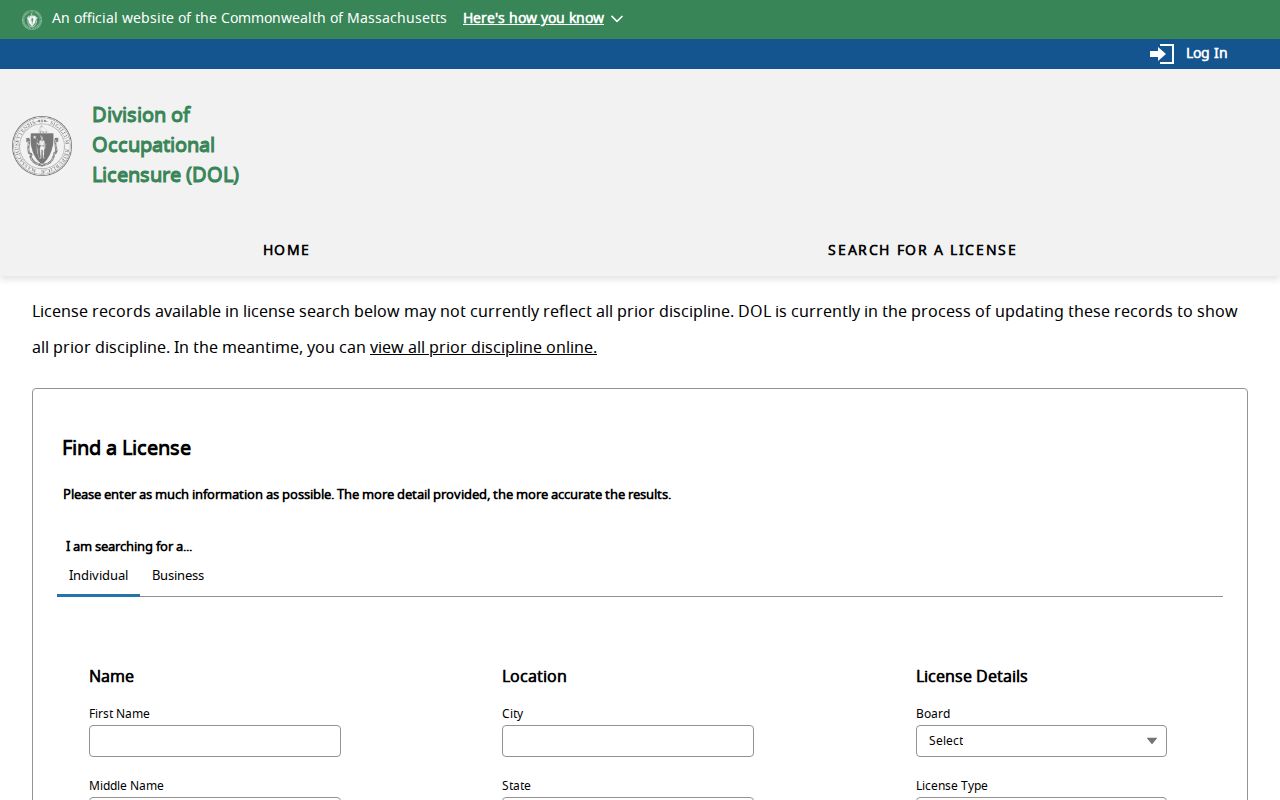
A license hit earns trust when its board, type, city, and status line up with other official records. It helps separate similar names.
The official Massachusetts unclaimed-property search offers a free name-and-address route to a claimant or heir lead.
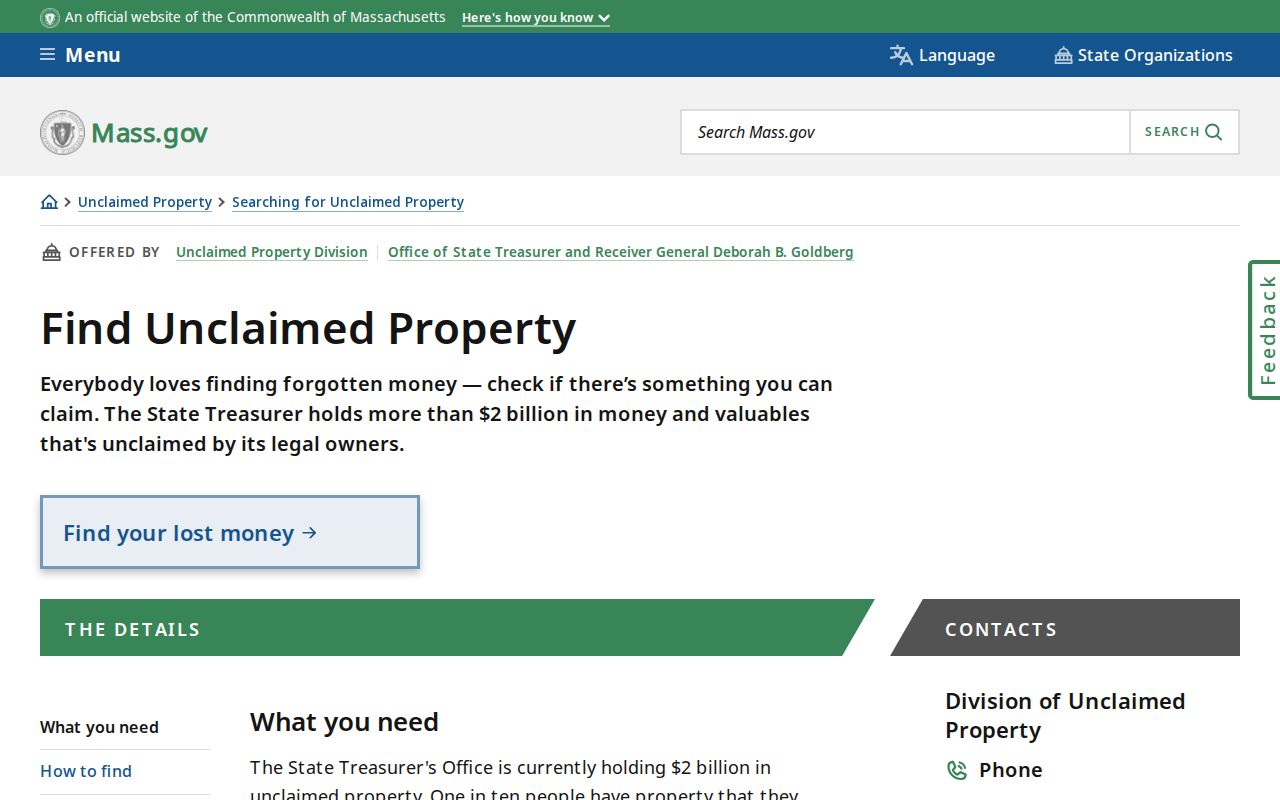
A state-held property result still obligates the claimant to prove entitlement. It is not proof of a current Weymouth address.
The state’s SORI request instructions lay out separate online, mail, local-police, and identification rules.
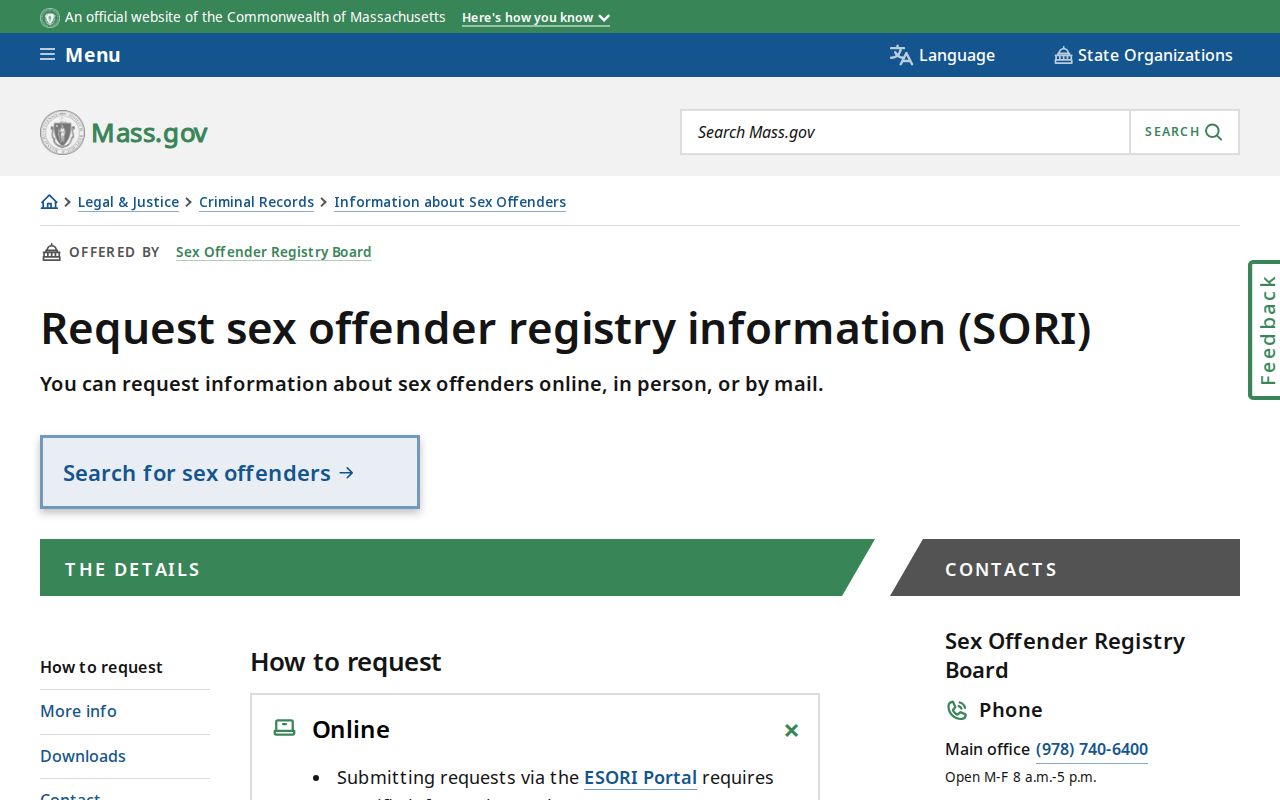
Use dockets for case context and follow SORI’s own access rules for classification details.
Weymouth Vital Record Proof
Vital records prove events and family ties. They are not a browseable list of current Weymouth residents. The Weymouth Town Clerk issues qualifying local birth, death, marriage, and intention copies. Statewide records from 1936 forward sit with the Massachusetts Registry of Vital Records and Statistics, records from 1931 to 1935 moved to the State Archives, and earlier events may rest with the town where they occurred. Massachusetts publishes no public browseable online vital-record index.
The Massachusetts vital-record order page walks through online, mail, and in-person routes.
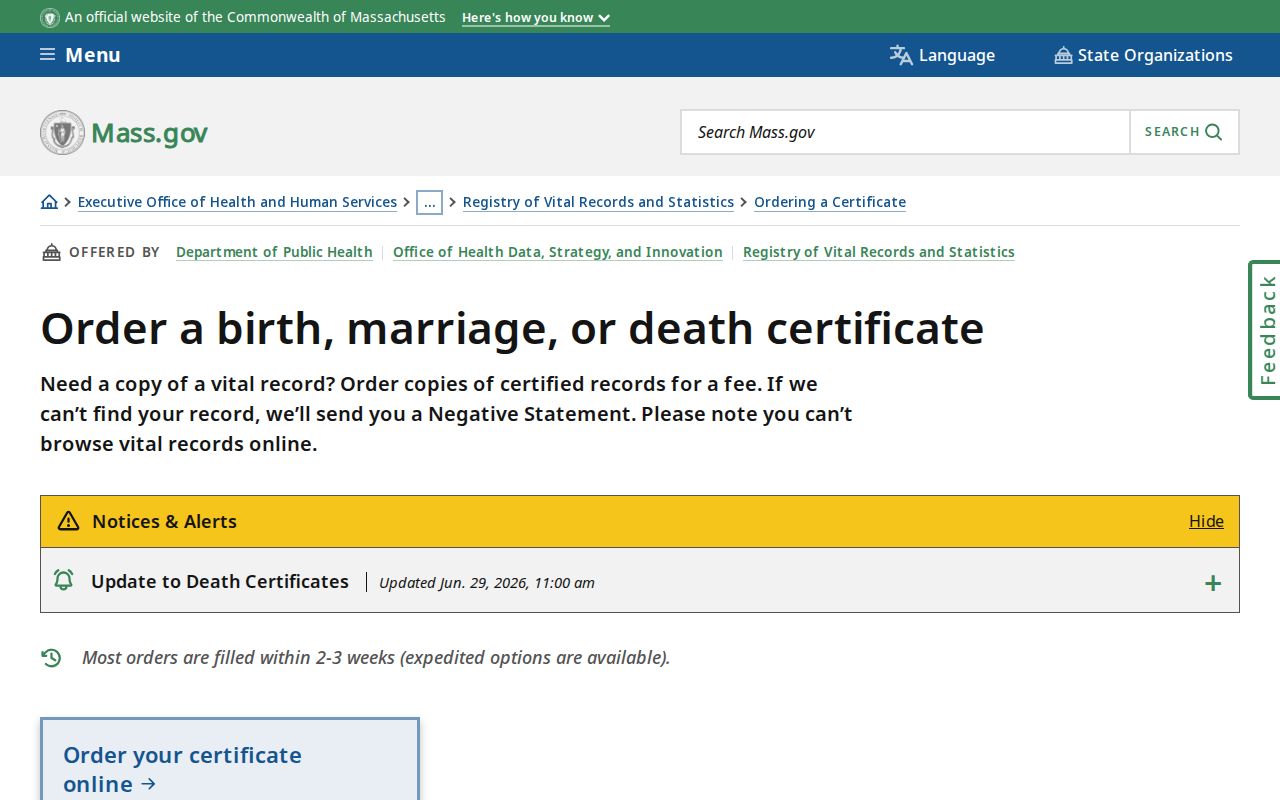
Access rules shift by event and parentage. Weymouth treats local birth records as generally public unless the birth was to unmarried parents. Massachusetts also restricts full Social Security numbers on death records. Follow the custodian’s current form, identification rules, eligibility details, and fee schedule.
Note: Name the event town and year range in any certificate request. The right custodian can then locate it.
Historic Weymouth Resident Directories
For tracing a past household, an old town directory often beats a current residents directory. The Massachusetts State Library holds selected Weymouth volumes spanning 1870–1871 through 1953. What is inside varies by year. A typical run lists residents and businesses alphabetically. It also names town officers, schools, societies, churches, post offices, and maps. Some editions add a street or house guide. A single entry might give a name, occupation, address, or a spouse or widow notation. A street guide flips the lookup. It starts from the address. It then names the occupant or head of household instead.
Tufts Library deepens the historical shelf with town reports from 1850 through 2017. It also holds high-school yearbooks from 1914 through 2013. Its digitized Weymouth Gazette runs cover 1867 through 1924 and 1926 through 1928. Original special-collection materials require an appointment, a researcher application, and identification. The Weymouth city directory collections lay out the full historical shelf. They also explain the method for reading an entry.
Weymouth Gazette Name Trails
Village names are one of the best search keys in a Weymouth residents directory. North Weymouth, Weymouth Landing, East Weymouth, and South Weymouth line up loosely with the four local ZIP areas. None is a separate municipality. Old maps add more labels. Eastern Neck, Lovell's Corner, Nash's Corner, Weymouth Centre, and Weymouth Heights all appear in historical sources. A street directory or resident lookup for Weymouth works best when you test those names beside Town of Weymouth. Also try plain Weymouth and any surname spelling variants.
The Weymouth Gazette is a strong companion to the city directory. It can date a property sale, a civic post, an obituary, a town meeting, or a business notice. It can also show a move between directory years. Newspaper OCR misreads New England names often. Always check a hit against the scanned image itself. Town reports add another long run of named material. They cover officials, appointments, committees, public works, memorials, and organizational history.
Note: Historical listings describe a time period and are not proof of a present address.
Weymouth Records Request Route
Weymouth routes requests for municipal records that are not already online through its NextRequest center, apart from vital certificates and police accident or incident reports. The Town Clerk serves as Records Access Officer under the Massachusetts Public Records Law, M.G.L. c. 66, § 10. A clear request helps the records office move fast. Name the record type, the date range, the department, your preferred electronic format, and whether you want inspection or copies. Ask for records that already exist. Staff cannot build a new resident list or research file on demand.
The Town's public-record request center is the starting route for any municipal file.
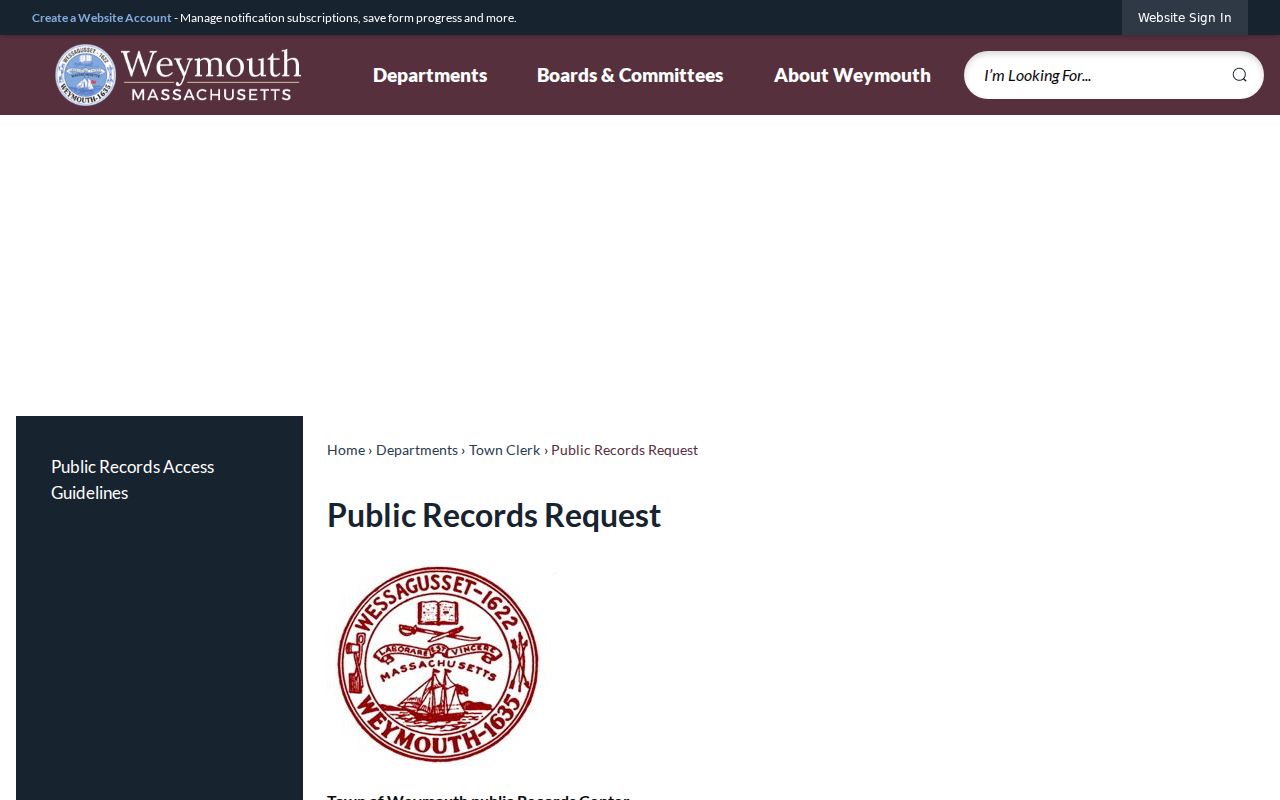
Expect an answer from Weymouth within 10 business days. The Town's guidelines allow electronic delivery when that is feasible, state copy charges up front, and permit certain labor and postage fees. Building Inspection offers no public permit-result portal. An address-based request to that records office can still ask what an existing file holds, such as permit number, application date, owner or applicant, work description, inspections, certificate of occupancy, and close-out.
Weymouth Privacy and Safe Use
Some records are withheld on purpose. Participants in the Massachusetts Address Confidentiality Program may use a substitute address. Confidential voter rolls sit outside ordinary resident lookup files. The federal Driver's Privacy Protection Act shields motor-vehicle personal information. Sealed, expunged, juvenile, adoption, and restricted vital materials stay closed. This holds even when a related name shows up in a public record. Never try to rebuild an address from substitute or protected data. That rule applies to any Weymouth residents directory.
Fixing an error in a record starts with a correction request to the custodian. The request should cite the record identifier and include documentary proof. A public-record request is different in kind: it asks for a copy of a record, and it never changes what the record says. Solicitations that quote a real address, whether a deed mailing or an email, deserve skepticism, so verify through an official office contact instead of a reply link.
Weymouth Digitization and Fraud Checks
Weymouth is spending federal relief money to digitize its paper records. The ARPA project page lists a 2025–2026 allocation for that work. The total obligation posted is $129,173. So far $1,327.50 has been expended, reported through the fourth quarter of 2025. That leaves $127,845.50 remaining. The entry names no record series and promises no completion date. Until a series is converted, ask its current custodian for anything missing. Digitization makes records easier to reach. It still does not turn every municipal record into a public name directory.
The Norfolk Registry offers a consumer notification service. It alerts a subscriber whenever a document is recorded in that person’s name. That can flag a suspicious filing early. It cannot prevent fraud, though, and it is no substitute for a title review. Weymouth sounded an alarm in August 2026 about fake invoices. The invoices were built around a real property address. Check the sender’s domain before replying. Then call the office through an official Town contact number. Do it before any money or account details change hands.