
Finding Weymouth Resident Records
Weymouth does not keep one public list that proves every person at every address. The useful path changes with the question. Start a current property question with the assessment map. Start an ownership-history question with the Norfolk Registry. Use the state voter form only to confirm an individual registration with the required identity details, while a request for public local voter data belongs with the Weymouth Board of Registrars and Town Clerk. For a former household, the strongest sequence often moves from an address to a deed, then to a directory, newspaper, cemetery, or town report.
Official records also have firm limits. An owner of record can be a trust, estate, company, or person who receives tax mail elsewhere. A deed names parties to a land transaction. A historical directory is a dated snapshot. Treat every match as one piece of a record trail, then compare names, dates, street references, and legal descriptions before drawing a conclusion about a Weymouth resident.
- Open the Weymouth MapGeo card for a known address and record the situs address, parcel identifier, owner, and title reference.
- Use the owner or title reference in the Norfolk Registry index, then follow grantor and grantee names through earlier deeds.
- For an individual voter-status confirmation, enter the registered first and last name, date of birth, and residential ZIP in the state tool.
- For an older Weymouth household, compare directory years with town reports, Gazette notices, yearbooks, and census records.
- When no online source holds an existing record, send a focused written request to the Town Clerk or the department that keeps it.
Note: A name match is a starting point, not proof that two records refer to the same person.
Weymouth Resident Record Hubs
Four offices form the practical core of a Weymouth residents directory search. The Board of Assessors supplies the parcel and assessment context. The Norfolk County Registry of Deeds keeps the recorded and registered land trail. The Town Clerk holds municipal archives, local vital records, elections, street lists, and many public-record requests. Massachusetts Trial Court Case Access is the entry point for public court docket research, while the paper file stays with the clerk or register that holds it. The address-by-address chain is developed further in the Weymouth street directory.
Norfolk County Registry of Deeds
649 High Street
Dedham, MA 02026
781-461-6101
Recorded land, Land Court, plans, and title references
Weymouth Board of Assessors
Town of Weymouth
Weymouth, MA
781-682-3677
Assessment cards and MapGeo property records
Weymouth Town Clerk
75 Middle Street
East Weymouth, MA 02189
781-340-5017
Municipal archives, election records, and requests
Weymouth is a Norfolk County municipality, but the custodians are not all in one place. The Registry is in Dedham, local records are held in Weymouth, and courts that serve a Weymouth matter are distributed among Quincy, Canton, Brockton, and Dedham. Identifying the record type before contacting an office avoids a search that is sent to the wrong custodian.
Weymouth MapGeo Property Records
The Town of Weymouth describes its Online Property Viewer as a gateway to improved search, printable record cards and tax maps, zoning, voting and deed links, FEMA flood information, and community layers. An address or street search can lead to a parcel polygon. From there, the card can supply a situs address, owner of record, mailing address, assessment information, property description, and a parcel identifier. Those are assessment facts, useful for following a property trail but not a complete list of people at the location.
See the Town’s Online Property Viewer introduction before using the public map.
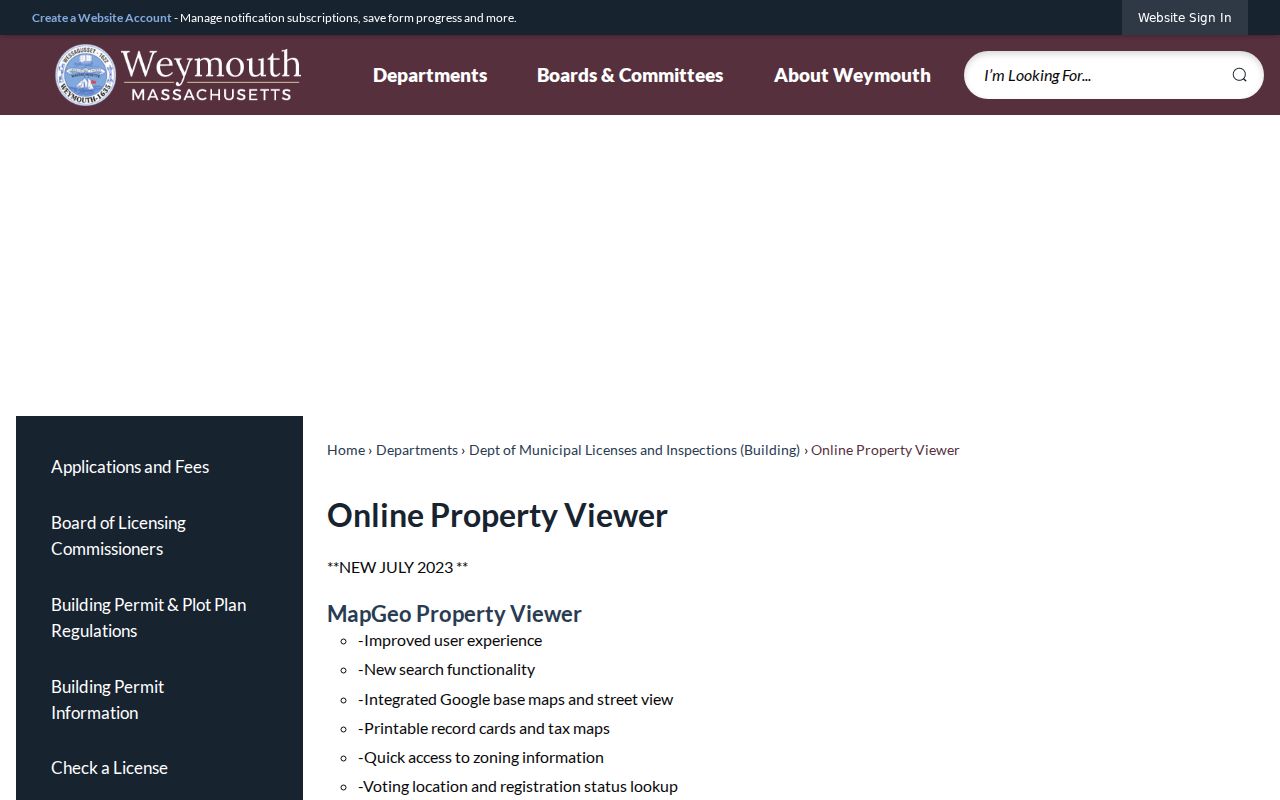
The Town page frames MapGeo as a property and records tool, which helps separate a parcel search from a search for present household members.
The live Weymouth MapGeo property search is the working map for an address, owner, or parcel inquiry.
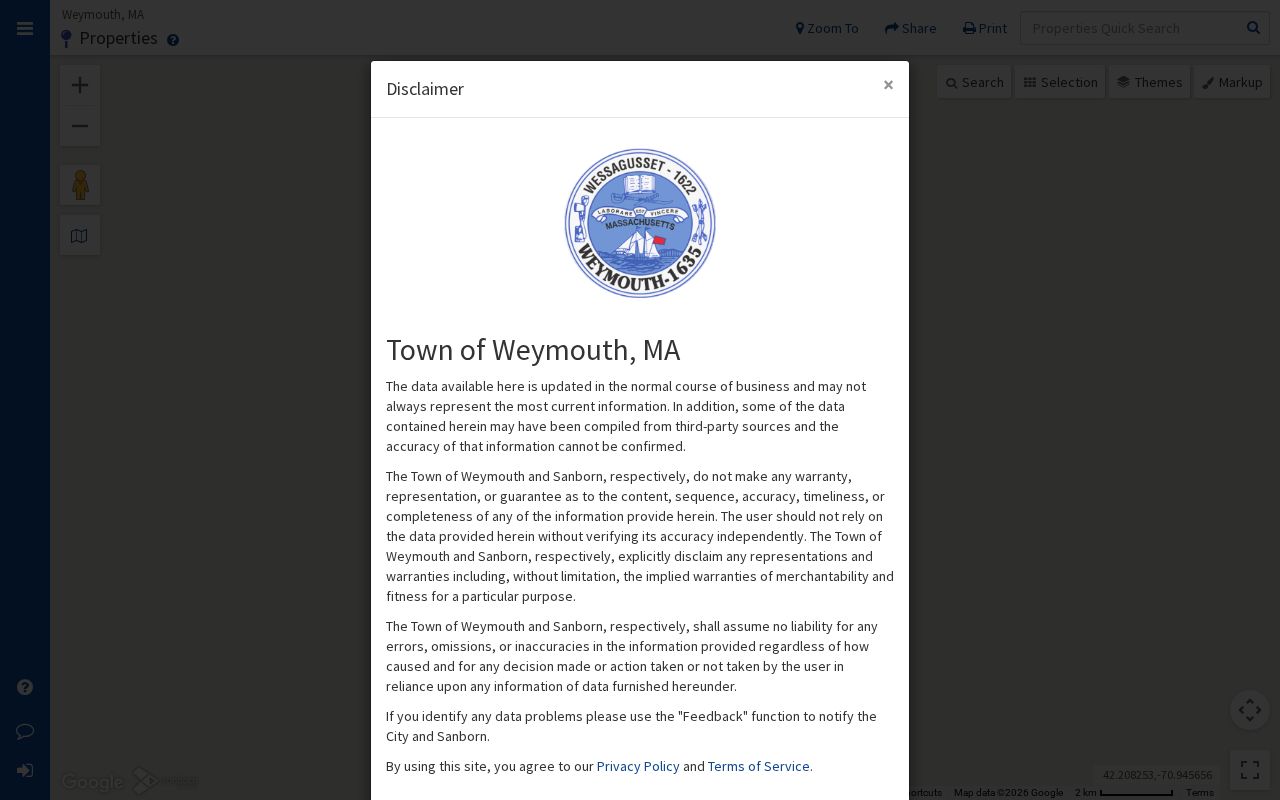
Use the printed card or tax-map reference to carry a specific parcel into the Registry search, rather than assuming the map pin settles who occupies a Weymouth address.
| MapGeo field or control | How it helps |
|---|---|
| Address or street search | Locates a mapped situs address or a street segment. |
| Owner name | Supplies the current assessment owner as a title-search lead. |
| Parcel or property ID | Connects the card, tax map, and later file request. |
| Printable card and tax map | Preserves the assessment and map reference for comparison. |
| Deed and voting links | Points toward the Registry or election information without turning the map into a resident roll. |
Note: MapGeo supplies a current assessment view, so save the card date before comparing it with older title or directory evidence.
Weymouth Voter Confirmation Records
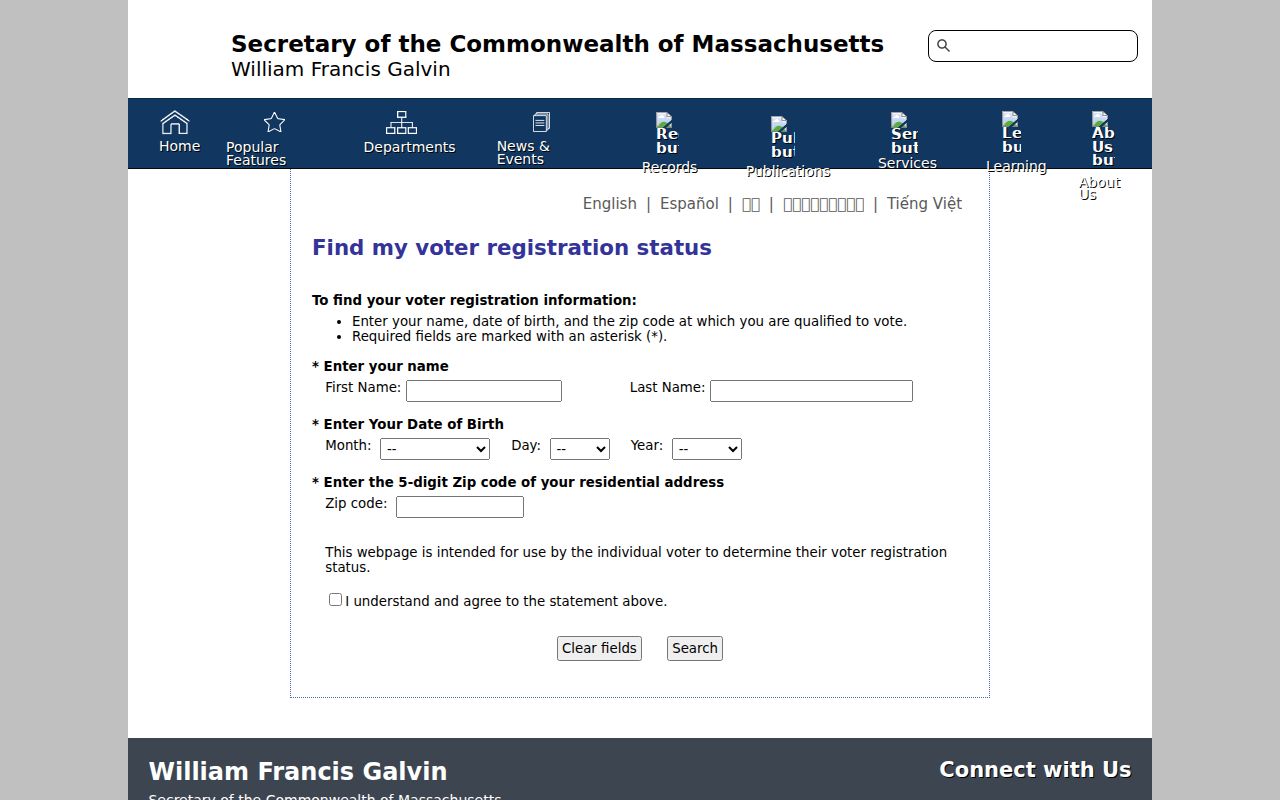
Massachusetts provides an individual voter-status form, not a browseable statewide directory. It asks for first name, last name, month, day, year, a five-digit residential ZIP, and an agreement acknowledgement. A failed search can reflect an old ZIP, a name used when registering, a recent change, an inactive or cancelled record, or a protected record. It should not be used as a way to assemble a street-wide list.
The official Massachusetts voter-status search shows the required confirmation fields.
For existing public voter records beyond an individual confirmation, contact Weymouth’s Board of Registrars or Town Clerk and specify the list type, date, format, and needed redactions. Public categories can include name, residence address, party, date of birth, status, and voter ID, while phone, email, veteran status, permanent absentee status, minor records, and confidential records are withheld.
Current Weymouth Resident Sources
Current sources answer different, narrow questions. The assessment card concerns a parcel and owner. Land records concern title and recorded instruments. A local voter file concerns public election fields subject to exclusions. Court dockets record cases, not a person’s current address. The comparison matters because a reliable Weymouth residents directory search keeps each record in its proper lane.
| Record source | Best local use | Custodian | Access route |
|---|---|---|---|
| MapGeo assessment card | Owner, situs, parcel, mailing clue, and tax-map context | Weymouth Assessors | Public viewer |
| Recorded or registered land | Title parties, deed reference, legal description, and plans | Norfolk Registry | Free index and counter research |
| Local voter record | Public registration fields and street-list context | Board of Registrars / Town Clerk | Focused local request |
| Court docket | Case number, party, type, events, and disposition | Trial Court clerk | MassCourts, terminal, or clerk |
| Municipal file | Existing permits, agendas, or department records | Weymouth department | Department inquiry or public-record request |
A compiled commercial profile may blend old sources and same-name records. Official sources provide a clearer custodian, date, and record purpose. Neither type eliminates the need to verify the underlying document, especially when the result is being used to reconnect with family or research a property history.
| Official record | Compiled profile |
|---|---|
| Identifies the custodian, record type, and date. | May merge material from many dates and sources. |
| Can be checked against its original image or file. | Needs independent confirmation against the custodian. |
Note: A mailing address, a case caption, and a voter address each describe different record contexts.
Norfolk Deeds for Weymouth Residents
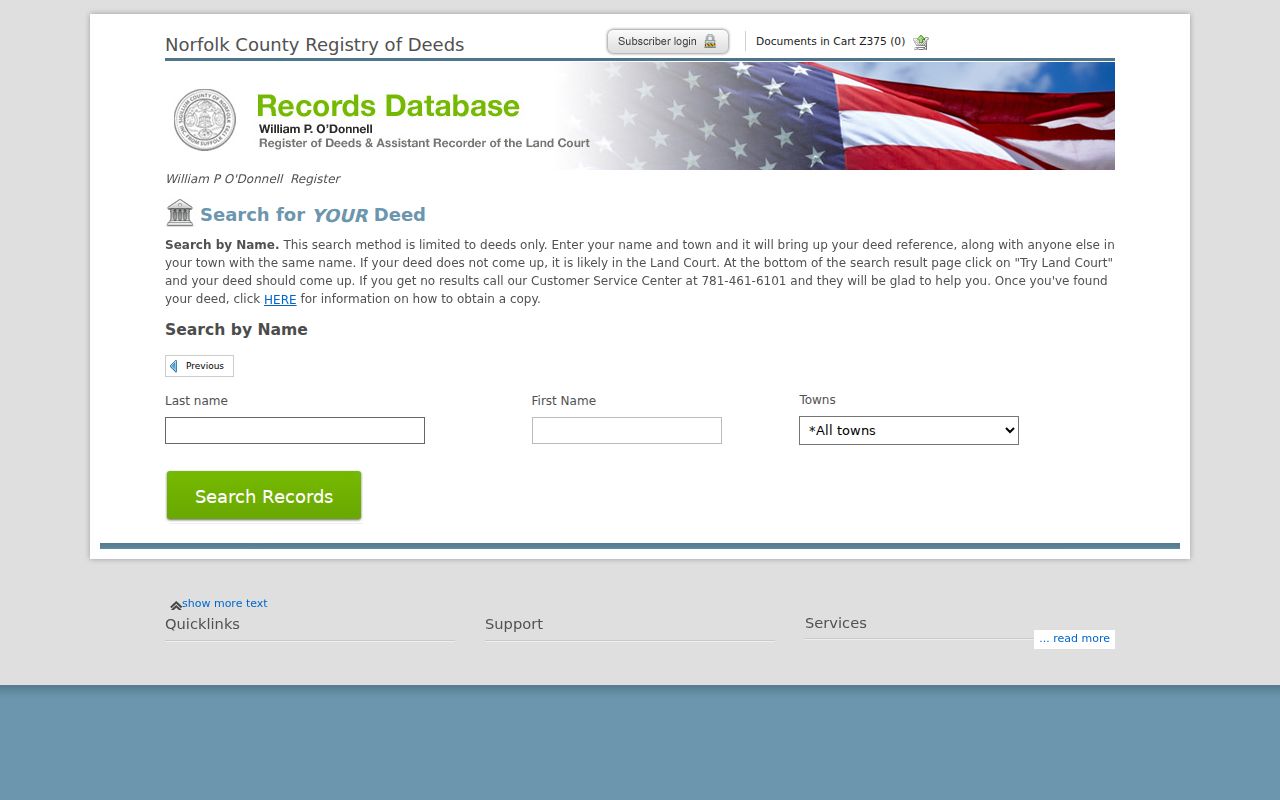
The Norfolk County Registry has recorded-land indexes and images from 1793 forward, scanned index books through 1955, and transcribed documents from 1793 to 1900. Its combined grantor and grantee index can be narrowed by party role, document type, town, date, book and page, or other parameters. Search the surname broadly first, then add a first name or middle initial. The Registry indexes the name as it appears on the original instrument, so an asterisk variant can help when spelling, initials, a spouse name, or a trust name changes the result.
The Registry’s Search for Your Deed screen offers a simple name-and-town entry point.
Address indexing is extensive for applicable documents from 2003 forward and limited before then. For an older Weymouth address, start with the current owner or legal reference from MapGeo, find the latest deed, then follow the seller as a prior grantee. Registered Land, also called Land Court, has a separate online index beginning in 1973, so an empty recorded-land search may need a Land Court search instead.
- Parcel
- A mapped unit of property used in assessment records.
- Index
- A finding tool that points to a record, rather than the record image itself.
- Grantor and grantee
- The party transferring an interest and the party receiving it in a land instrument.
- Legal description
- The title language that identifies land by lot, plan, boundary, or another legal reference.
Weymouth Court Record Checks
A court result can confirm that a named party appears in a particular public case, but it does not confirm a present residence. Massachusetts Trial Court Case Access is the statewide starting point. Civil searches use party names, while most criminal searches use a case number. Result screens can show a case number, case type, status, events, disposition, and calendar information. Sealed, impounded, juvenile, and other restricted records remain unavailable, and remote images can be more limited than material at a courthouse terminal.
The Massachusetts Trial Court Case Access landing screen leads to the public court search.
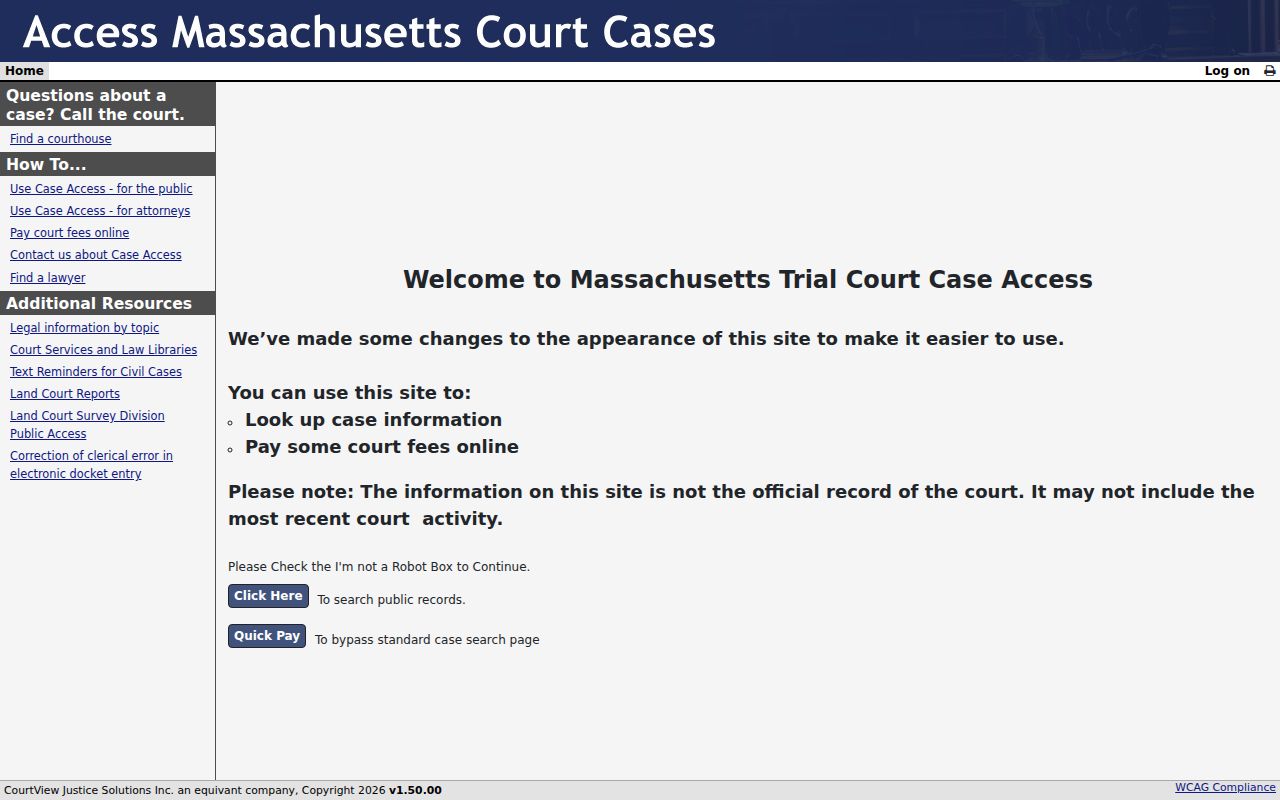
Weymouth matters can be served by Quincy District Court, Norfolk Probate and Family Court in Canton, Norfolk Superior Court in Dedham, and other courts named in the state serving-court directory. Ask the clerk holding the file for copies or certification. A docket search is an index to a case, not a substitute for the official file.
Note: Match a docket using its case number and case type, not only a shared party name.
Weymouth State Name Tools
Several state tools can add a narrow, dated lead to a Weymouth resident search. The Division of Occupational Licensure form can search by first, middle, or last name, city, state, ZIP, board, license type, and license number. It verifies a credential or license status, rather than offering a complete personal history. The Massachusetts Treasurer’s unclaimed-property search uses name and address details and requires proof before a claim. The SORI process has separate public-level limits and should never be treated as general case research.
The Massachusetts license search shows the available name, location, board, and license fields.
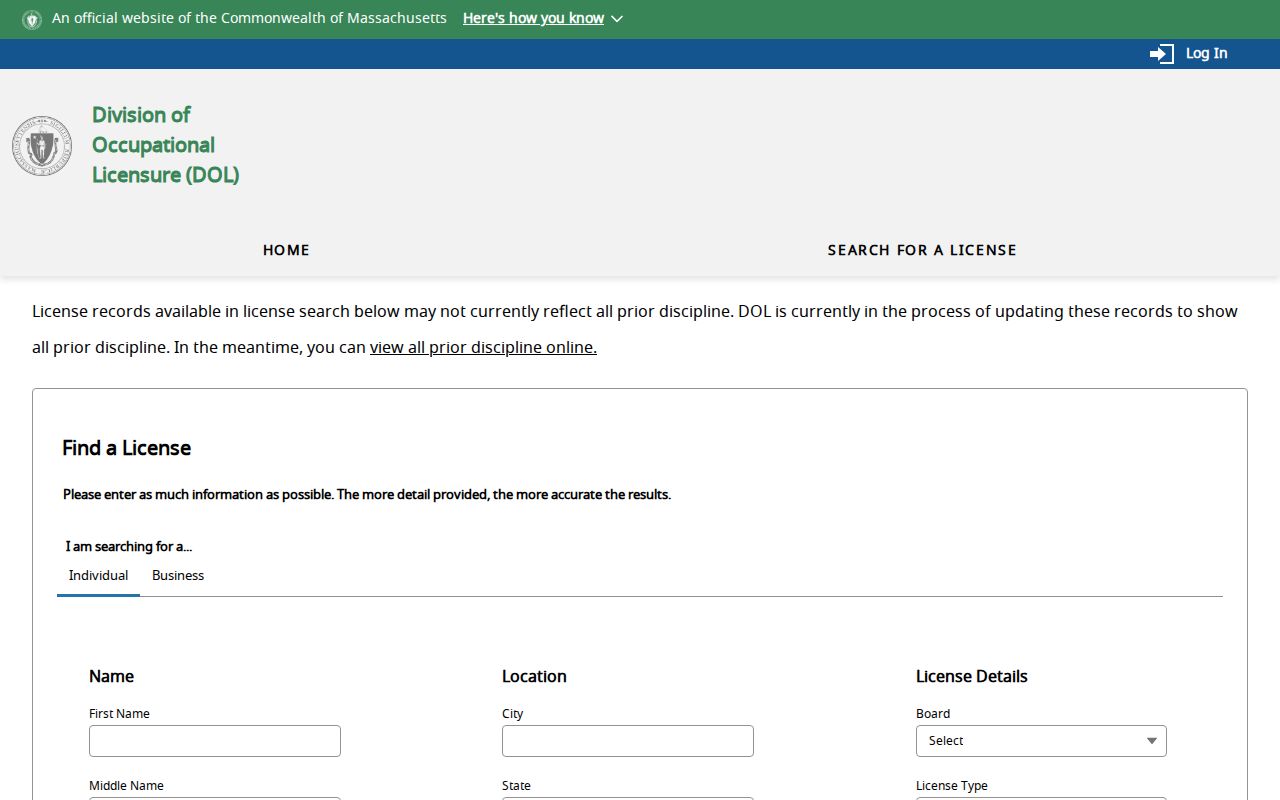
A matching license can help distinguish similar names when its board, type, city, and status align with other official records.
The official Massachusetts unclaimed-property search is a free name-and-address route for a claimant or heir lead.
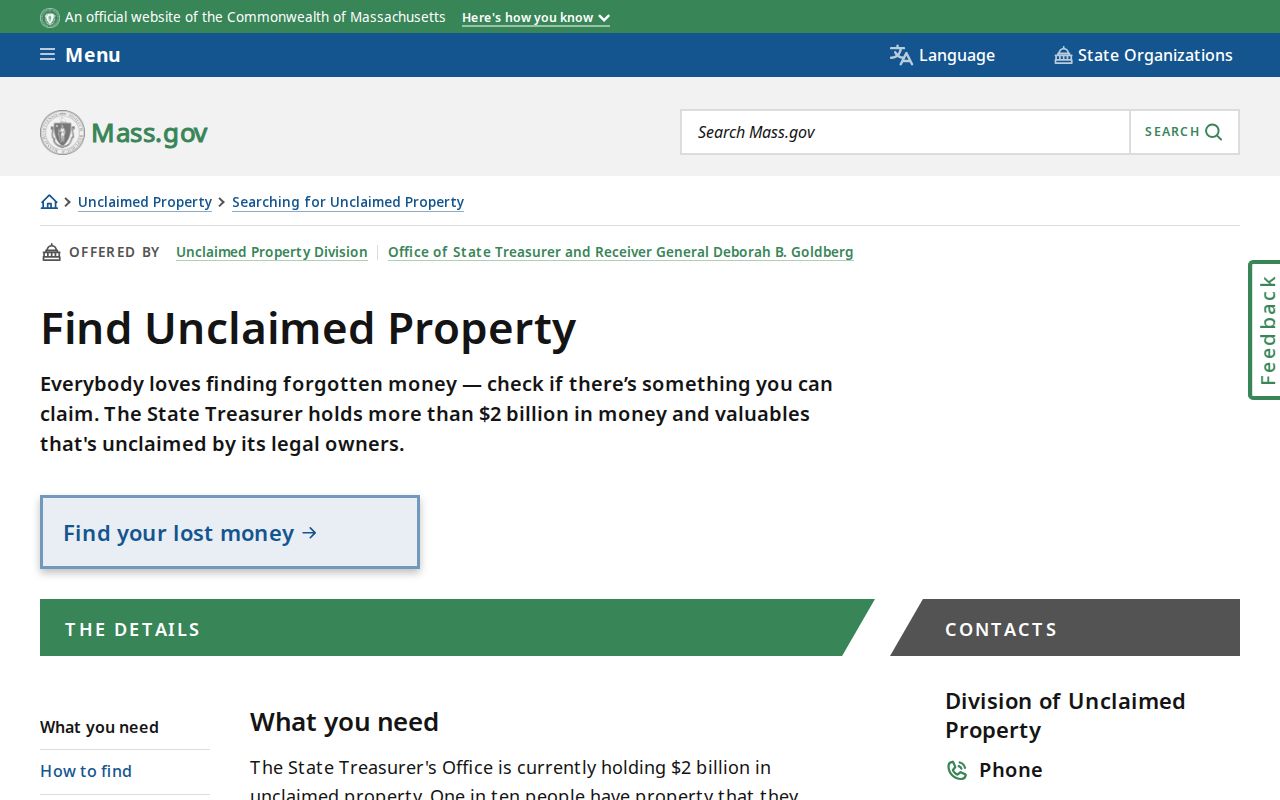
A state-held property result still requires the claimant to supply proof, so it is not confirmation of a current Weymouth address.
The state’s SORI request instructions explain the separate online, mail, local-police, and identification rules.
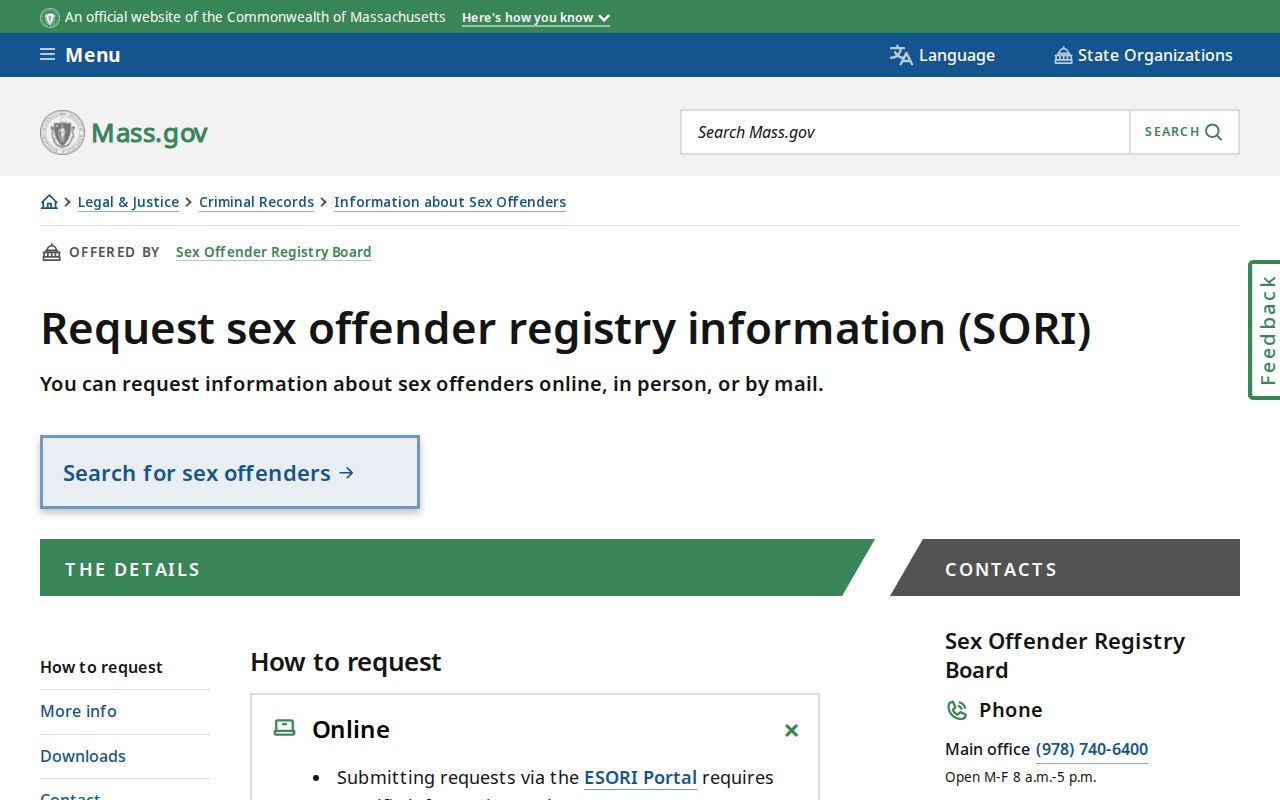
Use court dockets for case context and follow SORI’s own access rules for classification information.
Weymouth Vital Record Proof
Vital records establish events and family relationships, not a browseable list of current residents. Weymouth Town Clerk issues qualifying local birth, death, marriage, and intention copies. The Massachusetts Registry of Vital Records and Statistics holds statewide records from 1936 forward, while 1931 through 1935 records moved to the State Archives and earlier events may be kept by the event town. Massachusetts does not publish a public browseable online vital-record index.
The Massachusetts vital-record order page explains online, mail, and in-person routes.
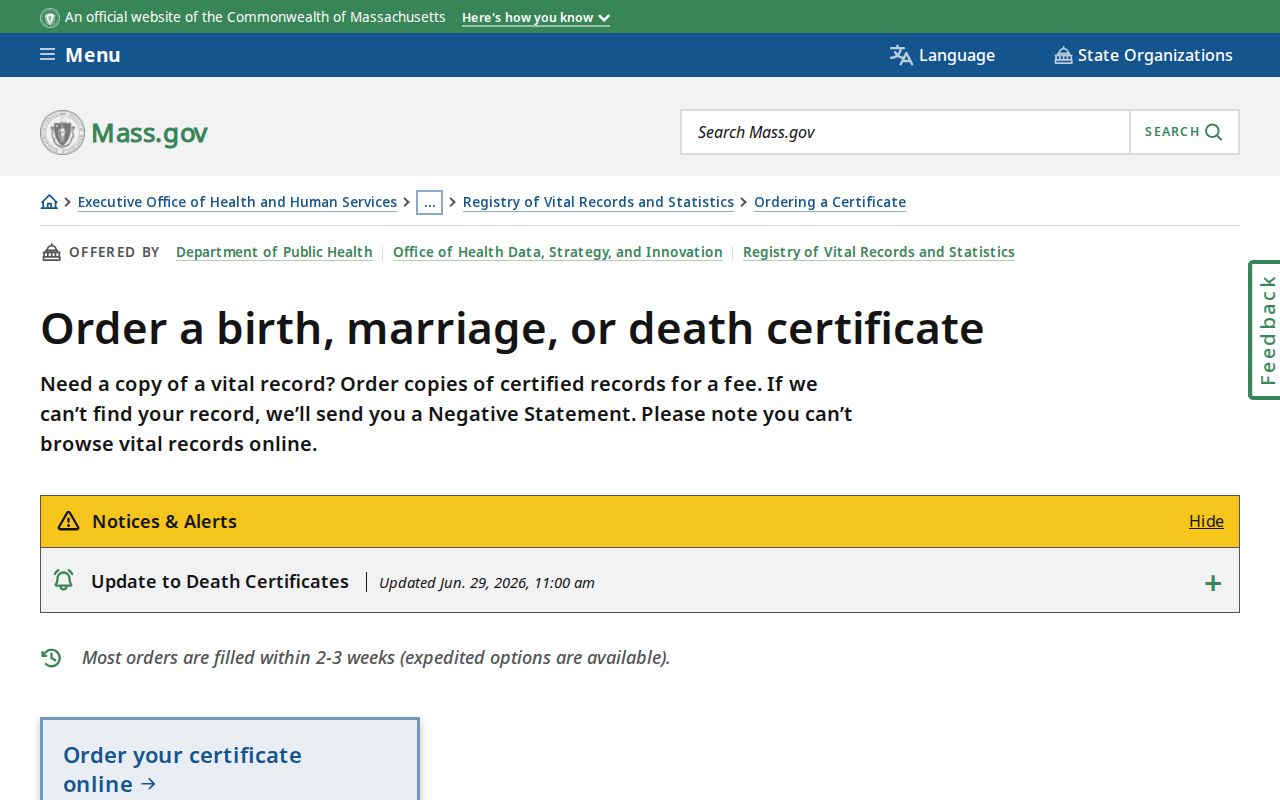
Access rules vary by event and parentage. Weymouth notes that local birth records are generally public unless the birth was to unmarried parents, and Massachusetts restricts full death-record Social Security numbers. Requesters should use the current form, identification, eligibility information, and fee schedule supplied by the custodian.
Note: A certificate request should name the event town and year range so the correct custodian can locate it.
Historic Weymouth Resident Directories
Historical Weymouth directories make a better past-household tool than a current residents directory. Massachusetts State Library holdings include selected Weymouth volumes from 1870–1871 through 1953. The local runs can contain alphabetical resident and business entries, town officers, schools, societies, churches, post offices, maps, and selected street or house guides. An entry may supply a name, occupation, address, spouse or widow notation, but its form changes by year. A street guide reverses the lookup by starting with the address and then naming an occupant or head of household.
Tufts Library’s historic collection adds town reports from 1850 through 2017, high-school yearbooks from 1914 through 2013, and digitized Weymouth Gazette runs from 1867 through 1924 and 1926 through 1928. Original special-collection materials are appointment-only and require a researcher application and identification. The Weymouth city directory collections provide the full historical shelf and entry-reading method.
Weymouth Gazette Name Trails
Weymouth’s villages are a useful search key when a name or address seems to disappear. North Weymouth, Weymouth Landing, East Weymouth, and South Weymouth roughly track the four local ZIP areas, but they are not separate municipalities. Historical maps also use Eastern Neck, Lovell’s Corner, Nash’s Corner, Weymouth Centre, and Weymouth Heights. A directory or newspaper search should test those labels alongside Town of Weymouth, Weymouth, and a surname variant.
The Gazette can help date a sale, civic role, obituary, meeting, business notice, or move between directory years. Newspaper OCR can misread New England names, so confirm a hit against the scanned image. Town reports form another long run of named material, recording officials, appointments, committees, public works, memorials, and organizational history.
Note: Historical listings describe a time period and should not be read as evidence of a present address.
Weymouth Records Request Route
When an existing municipal record is not online, Weymouth directs requests other than vital certificates and police accident or incident reports through its NextRequest center. The Town Clerk is the Records Access Officer under the Massachusetts Public Records Law, M.G.L. c. 66, § 10. A useful request identifies the record type, date range, department, preferred electronic format, and whether inspection or copies are wanted. It should ask for existing records, not demand that staff create a new resident list or research file.
The Town’s public-record request center is the starting route for municipal files.
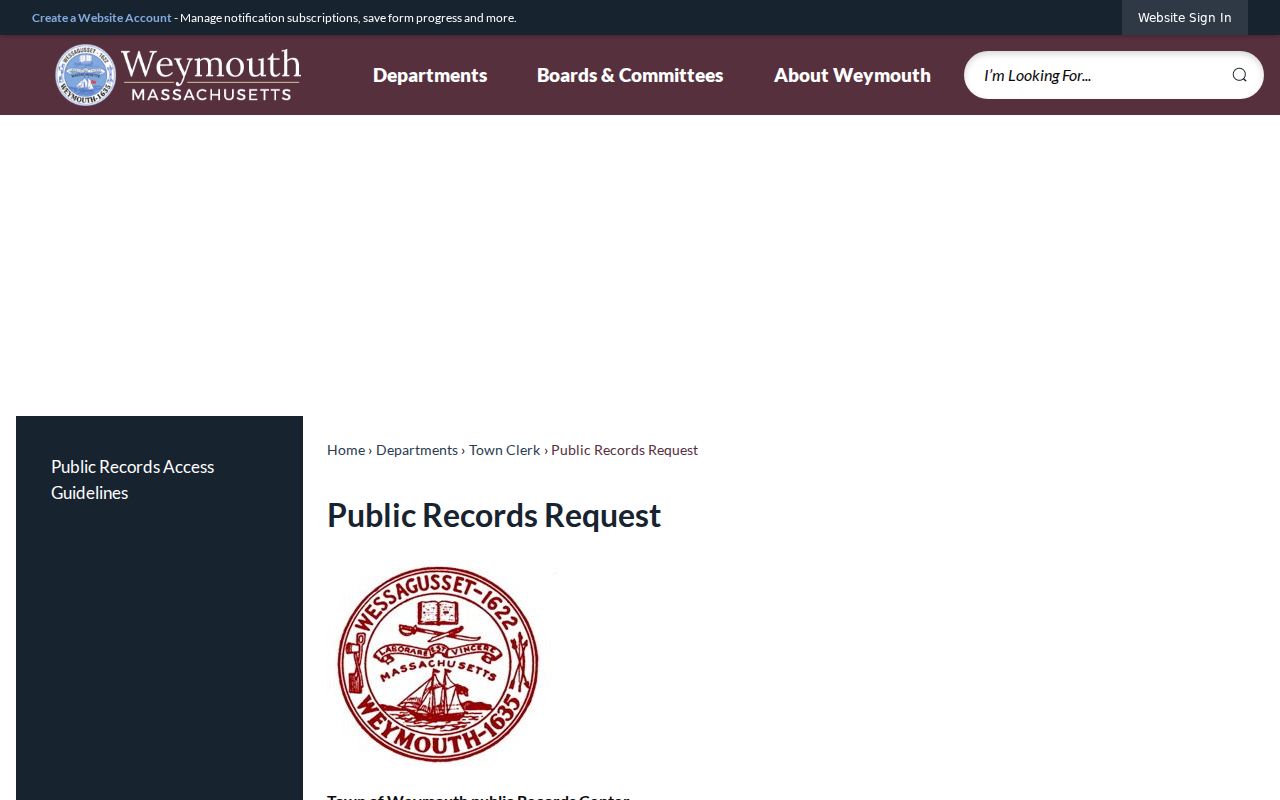
Weymouth generally responds within 10 business days. Its guidelines permit electronic delivery when feasible, set stated copy charges, and allow certain labor and postage charges. Building Inspection has no verified public permit-result portal, so an address request can ask whether an existing file includes permit number, application date, owner or applicant, work description, inspections, certificate of occupancy, and close-out.
Weymouth Privacy and Safe Use
Some records are deliberately withheld. Massachusetts Address Confidentiality Program participants may use a substitute address. Confidential voter records are excluded from ordinary files. Motor-vehicle personal information is protected by the federal Driver’s Privacy Protection Act. Sealed, expunged, juvenile, adoption, and restricted vital materials do not become available just because a related name appears in a public record. Do not try to reconstruct an address from substitute or protected data.
Errors need a correction request to the custodian, supported by the record identifier and documentary proof. A public-record request asks for a record; it does not change that record. If a deed solicitation or an email uses a real address, verify it through an official office contact rather than a reply link.
Weymouth Digitization and Fraud Checks
Weymouth’s ARPA project page lists a 2025–2026 allocation for paper-record digitization. The posted entry states a total obligation of $129,173, with $1,327.50 expended as of the fourth quarter of 2025 and $127,845.50 remaining. The project page does not identify every record series or promise a completion date, so a missing item should still be requested from its current custodian. Digitization improves access, but it does not turn each municipal record into a public name directory.
Norfolk Registry consumer notification alerts a subscriber when a document is recorded in that person’s name. It can help flag a filing, but it does not prevent fraud or replace title review. Weymouth also issued an August 2026 alert about fake invoices that used a real property address. Confirm a sender domain and call the office through an official Town contact before sharing money or account information.